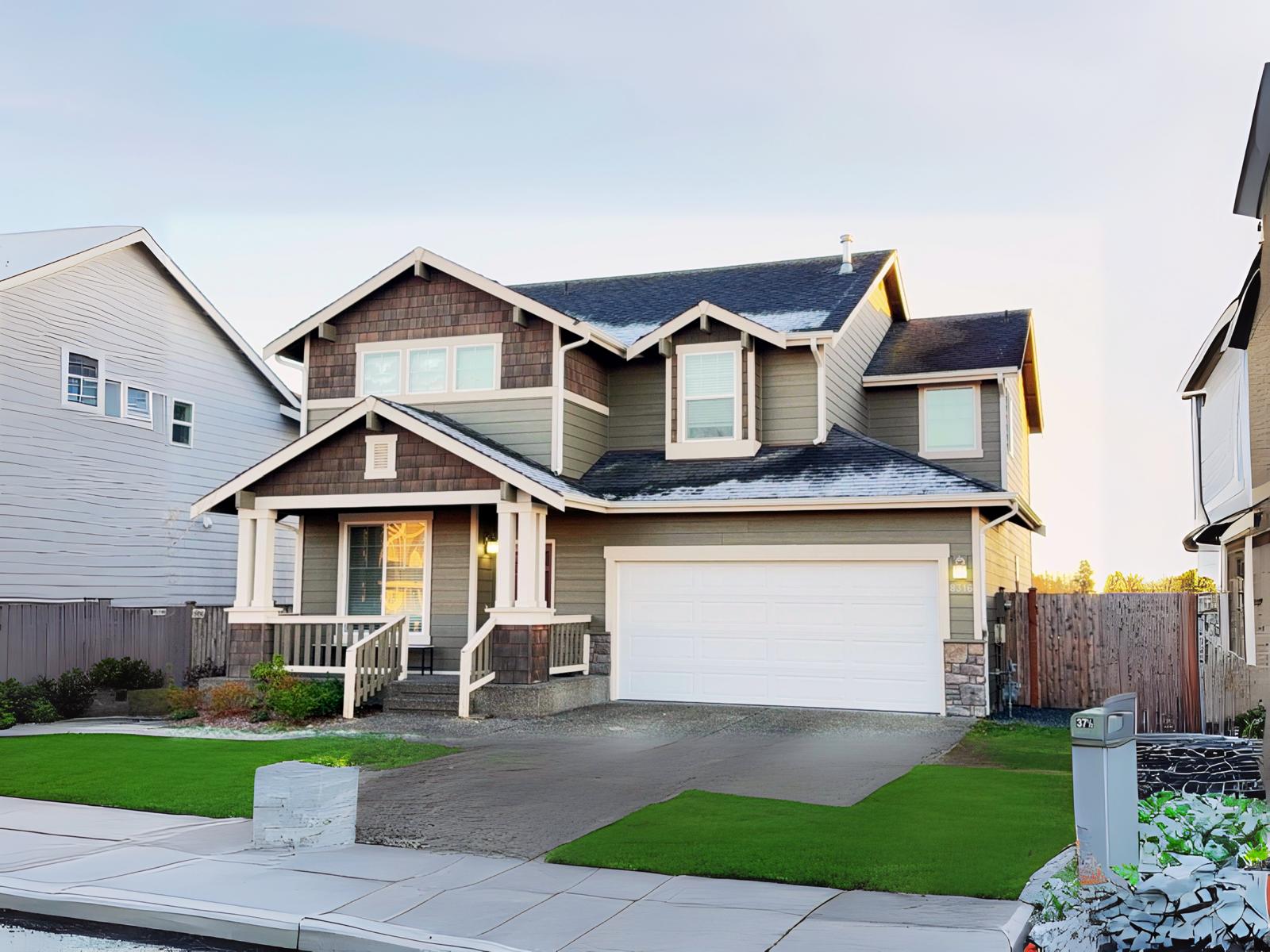

When someone needs more support than they can get at home, Washington families often hear two terms early: Adult Family Home and Assisted Living Facility. Both are licensed. Both can provide housing, meals, and help with daily living. And both can be excellent — for the right person. The difference is usually size, setting, and day-to-day feel.
Quick definitions (Washington State)
DSHS describes an Adult Family Home (AFH) as a licensed home that provides housing and care for up to six adults in a regular house in a residential neighborhood. An Assisted Living Facility (ALF) is licensed to provide housing and care for seven or more people in a home or facility setting.
That capacity difference shapes almost everything else: how quiet the environment feels, how well staff can know each person, how community life is organized, and how “home-like” the day can be.
Side-by-side comparison
| Topic | Adult Family Home | Assisted Living Facility |
|---|---|---|
| Typical size | Up to 6 residents | 7 or more residents |
| Setting | Usually a regular house in a neighborhood | Larger residential facility or campus-style building |
| Daily feel | Household rhythm, shared meals, familiar faces | More structured community programming and common areas |
| Relationships | Easier for staff to know preferences deeply | More residents and often more rotating social options |
| Best for | People who do better in a small, steady home | People who want more built-in social activity and apartment-style living |
| Regulation | Licensed by Washington DSHS | Licensed by Washington DSHS |
Both settings may offer personal care help, medication support, and specialized services depending on the provider. Always ask what a specific home or facility actually offers — licenses describe the category; the program describes the experience.
Why families choose an Adult Family Home
Families often choose an AFH when the person needs support but still deserves a life that looks and feels residential. In a six-bed home, staff can notice mood changes sooner, celebrate small wins, and keep routines personal. Meals happen at a real table. Evenings can feel familiar. The house can become a known place rather than a rotating set of hallways.
That matters especially for:
- Young adults with developmental disabilities who are building independence and need coaching, not an institutional pace
- Adults who become overwhelmed in large, busy environments
- People who need consistent relationships and predictable structure
- Families who want to stay closely involved with a small care team
- Individuals whose behavioral health needs are better supported in a calm, supervised home than in a crowded setting
At GuaranteeCare in Marysville, the small size is intentional. Six residents means care can stay individualized — whether someone is focused on skill-building and community life or needs more structured behavioral health support.
Why families choose Assisted Living
Assisted living can be a strong option when someone wants more built-in social programming, a larger peer community, or apartment-style privacy with shared services nearby. Some people enjoy activity calendars, more on-site amenities, and the feeling of a broader community.
Assisted living may also offer a wider range of care-level options under one roof, depending on the facility. For some families, that growth pathway is an important factor.
The key is honesty about temperament. If a person withdraws, escalates, or shuts down in busy environments, a larger facility’s social advantages may become stressors instead of benefits.
Care is not only a building type — it is a match
One of the biggest mistakes families make is choosing based on category labels alone. “Adult Family Home” and “Assisted Living” describe license types. They do not automatically tell you:
- Whether staff are experienced with developmental disabilities
- Whether the home can support complex behavioral health needs
- How medication, overnight support, and crisis planning are handled
- Whether the culture is warm, rushed, clinical, or genuinely person-centered
Two AFHs can feel completely different. Two assisted living communities can feel completely different. Tour with the person’s needs in hand, not only a preference for “small” or “big.”
Questions that reveal the real difference on a tour
Whether you visit an AFH or an assisted living community, ask:
- How many residents live here, and how many staff are on duty during day and night shifts?
- How do you individualize routines for someone who needs more quiet — or more coaching?
- What does a normal weekday look like from morning to evening?
- How do you support goals like independence, community participation, or behavioral stability?
- How do families get updates, and how are concerns handled?
- What happens if support needs change after move-in?
In an Adult Family Home, you should be able to picture the person at the table, in the living room, and in a daily rhythm with familiar people. In assisted living, you should be able to picture how the person will use common spaces, activities, and support services without feeling lost.
Funding and referrals in Washington
Both AFHs and assisted living settings may serve private-pay residents, and some also work with state-funded long-term care pathways when a person is assessed and approved. Eligibility, contracts, and available openings vary. If a case manager from DSHS, DDA, or a hospital discharge team is involved, ask them which setting types match the assessment and what documentation you will need for referrals.
If you are exploring specialty behavioral health residential supports, ask whether a home works with pathways such as Community Behavioral Health Supports (CBHS) or Expanded Community Services (ECS). Those programs are not identical to a license type — they are support pathways that may be available in certain residential settings when criteria are met.
How to decide without second-guessing yourself
Use a simple decision filter:
- Environment: Does this person do better in a small household or a larger community?
- Support match: Can this specific provider meet clinical, behavioral, and daily living needs?
- Relationships: Will staff have enough capacity to know the person well?
- Family access: Can loved ones visit and collaborate easily?
- Stability: Does the setting support both today’s needs and likely near-term changes?
If three or more answers point toward a small licensed house with individualized attention, an Adult Family Home deserves serious consideration. If the person clearly wants broader social programming and more independent apartment-style living with on-site help, assisted living may be the stronger path.
A practical next step for Snohomish County families
If you are comparing options around Marysville, Everett, Lake Stevens, Arlington, Snohomish, Smokey Point, or Tulalip, start with a short list, tour in person, and take notes the same day. Then talk with the person’s case manager or care team before you finalize.
GuaranteeCare is a licensed six-bed Adult Family Home in Marysville. We focus on young adults with developmental disabilities and adults who need structured behavioral health support. If a small home sounds like the right category, we welcome a tour and an honest conversation about fit.
Want help comparing what “small home care” feels like?
Tour GuaranteeCare, ask direct questions, and see whether a six-bed Adult Family Home matches what your family is looking for.